How to Find Zero Waste Travel Destinations: Overcoming Common Challenges
The first time you consider zero waste travel, your brain floods with worst-case scenarios. You picture yourself explaining silicone bags at airport security. Imagine Bangkok street vendors confused by your Tupperware. You worry “eco-friendly accommodation” means composting toilets in yurts.
Here’s what nobody tells you: that awkwardness is the entire barrier between you and sustainable travel. The mechanics aren’t complicated. What stops people isn’t logistics—it’s the fear of standing out, seeming difficult, or accidentally offending someone.
Traditional travel generates waste at three pressure points: where you sleep (hotels with mini toiletries and disposable linens), where you eat (takeout packaging), and how you move (bottled water, packaged snacks, printed tickets). Zero waste travel means intercepting waste at these friction points with simple, replicable systems.
Once you’ve navigated these situations twice, the script becomes automatic. You’ll stop feeling like an activist and start feeling like an experienced traveler who knows what they want.
Zero Waste Hotels and Eco-Friendly Accommodations: Where to Stay
Premium properties now lead the sustainable travel movement because eliminating disposables signals higher quality. Glass pump bottles of locally sourced soap cost more than plastic minis. Heavy cotton robes laundered after each guest are luxury investments compared to disposable slippers.
Stop thinking “sacrifice.” Start thinking “luxury minimalism.” You’re opting into spaces that invested in durability over disposability.
The magic phrase: “Do you offer refillable toiletry dispensers and have a composting program?” This separates genuine zero waste hotels from places with only a “reuse towels” card.
“Do you offer refillable toiletry dispensers and have a composting program? I’m avoiding single-use plastics.”
Best Zero Waste Hotels in Europe
Conscious Hotel, Amsterdam: All four locations feature bulk soap dispensers, plant-based breakfast buffets with zero packaging, and EarthCheck Gold certification. Rooms from €140/night.
Svart Hotel, Norway: Opening in Arctic Circle with energy-positive design, on-site composting, and exclusively package-free amenities. Pre-booking available at svart.no.
Zoku Amsterdam: Loft-style sustainable accommodations with kitchen facilities, refill stations on every floor, and partnerships with local zero waste grocery stores. From €165/night.
Top Plastic-Free Accommodations in Asia
Baba Beach Club, Phuket: Thailand’s first plastic-free resort with bamboo toothbrushes, coconut-shell soap dishes, and beach cleanup programs. From 4,500 THB/night.
Desa Potato Head, Bali: Green Globe certified with zero single-use plastics, on-site waste management facility processing 20 tons monthly, and rooftop farm supplying restaurants. From $180/night.
Inkaterra Hotels, Peru: Native-owned eco-lodges in Machu Picchu and Amazon with composting toilets (luxury versions), solar power, and indigenous-grown organic meals. From $290/night.
Green Travel Accommodations in North America
Proximity Hotel, Greensboro: America’s first LEED Platinum hotel with 100 solar panels, geothermal HVAC, and refrigerator-to-fertilizer composting. From $189/night.
Bardessono, Yountville: Napa Valley property with rooftop gardens, Grey water recycling, and zero-waste kitchen partnering with local farms. From $475/night.
Your First Week: Search “LEED certified hotels [destination]” or “Green Key hotels [city].” Visit BookDifferent.com for sustainability scores. Email your top choices:
“I’ve brought my own toiletries and won’t need daily housekeeping—can you note that to reduce laundry waste?”
At breakfast:
“Does breakfast include bulk options rather than individual packaging? I’m happy to use my own container.”
Week Two Reality: Your “zero waste” hotel still has individually wrapped jam packets. Download the Zero Waste Home app. Locate the nearest bulk grocery store. Buy breakfast ingredients in your containers. Most rooms have mini-fridges for exactly this.
By Month One: Create a mental checklist: bulk soap dispensers, visible compost bins, water filtration system, opt-out housekeeping option. Book only properties meeting 3 out of 4 criteria. Start a running phone note listing verified properties by region.
Certification Decoder: Green Key certifies properties meeting 13+ environmental criteria including waste reduction and water conservation (greenkey.global). EarthCheck provides annual benchmarking scores from 0-100 based on third-party audits (earthcheck.org). LEED certification requires 40+ points across energy, water, materials, and indoor environmental quality (usgbc.org/leed).
![A modern, minimalist hotel bathroom with ceramic pump dispensers labeled 'shampoo' and 'body wash,' white cotton towels folded on a wooden shelf, and a small potted plant near a window with natural light streaming in]](https://www.koritips.com/wp-content/uploads/2025/12/image-66-1024x573.png)
Zero Waste Dining While Traveling: Restaurant and Street Food Strategies
Food creates the most social anxiety around zero waste travel. You’re not just requesting a service modification—you’re introducing a foreign practice into someone’s established routine.
The reframe: You’re not the “demanding activist.” You’re the “curious traveler.” This shifts the interaction from confrontation to cultural exchange.
The exact script:
“This looks delicious! Would you mind serving it in this container instead of disposable packaging? I’ll return it cleaned.”
Notice the structure: compliment first, request second, responsibility statement third.
For sit-down restaurants:
“I have my own container for leftovers—could the kitchen place food directly here instead of a takeout box?”
At bulk markets:
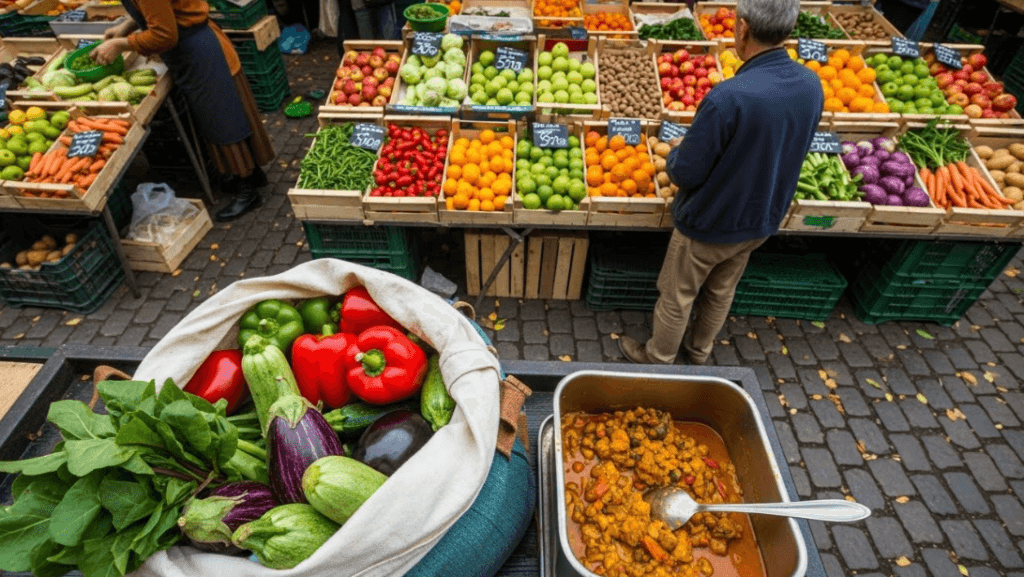
“I’m avoiding plastic bags today. Can I hand you items to weigh and return them to my cloth bag?”
Secret weapon when sensing hesitation:
“I’m learning about local sustainability practices—how do people here typically reduce waste?”
This transforms you from outsider imposing values to student seeking knowledge.
Best Zero Waste Restaurants by Region
Silo, London: World’s first zero waste restaurant with on-site flour mill, compost digester, and package-free ingredients. Pre-book at silolondon.com.
Nolla, Helsinki: Finnish zero waste restaurant tracking every gram of waste (currently 50g per cover). Five-course tasting menu €65.
Frea, Berlin: Plant-based with composting toilets feeding rooftop garden. All suppliers deliver in reusable containers. Mains €14-22.
Rhodora Wine Bar, Brooklyn: Zero waste wine bar with natural wines, composting program, and reusable container system. Small plates $8-16.
Plastic-Free Street Food Markets
Or Tor Kor Market, Bangkok: Thailand’s cleanest market with 90% vendors accepting containers. Best for prepared curries and stir-fries.
Markthalle Neun, Berlin: Thursday Street Food Market where 80% of vendors accommodate reusable containers. Arrive before 7pm.
Ferry Building Marketplace, San Francisco: Saturday farmers market with bulk bins, package-free bread, and container-friendly prepared foods.
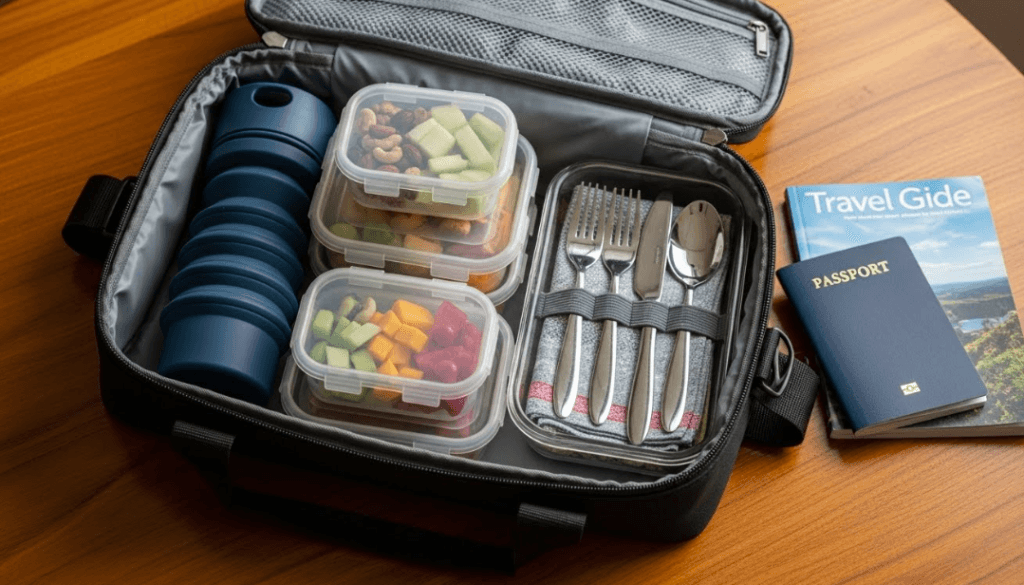
Your First Week: Pack three items: 500ml collapsible silicone container, cloth napkin, metal utensil set. Research “farm-to-table restaurants [destination]” and “bulk markets near [hotel].” Download HappyCow app (iOS/Android)—plant-based restaurants typically use less packaging.
The Week Two Trap: It’s 10 p.m. Everything’s closed. You’re hungry. Only option is plastic-wrapped sandwiches.
Mercy rule: Aim for 80% zero waste meals and accept reality for 20%. Prevention: pack emergency snacks—raw nuts in cloth bags, whole fruit, dried mango.
By Month One: Develop automatic filters. YES: Sit-down restaurants with visible plates, market stalls with bulk bins, cafes with “for here” dishware. NO: Fast food chains, airport convenience stores. MAYBE: Food trucks (50% accommodate containers), hotel buffets, bakeries.
Learn container-friendly cuisines: Mediterranean with dips? Perfect. Thai curry? Absolutely. Buffalo wings? Leakage nightmare—accept packaging or choose different dishes.
Water-Scarce Regions Compromise: In Morocco’s desert cities, inland Australia, drought-affected California, the water cost of washing containers may exceed the impact of compostable paper. Strategic solution: Use containers exclusively for dry goods. Accept paper packaging for wet foods or eat at restaurants with dishwashing infrastructure.
Zero Waste Transportation: Trains, Flights, and Buses Guide
Transportation waste isn’t about vehicle emissions. It’s the single-use culture built into every journey—plastic water bottles on trains, packaged snacks at gas stations, disposable headphones on flights, printed tickets glanced at once.
These exist because travel creates captive audiences. The fear of unpreparedness—not actual thirst—drives most transportation waste.
Reframe: You’re not being cheap. You’re being prepared. The traveler with a complete setup is experienced.
At airports or stations:
“Can I refill this bottle at a water fountain before boarding?”
On flights or buses:
“No thank you, I brought my own snacks—but could I have the blanket without the plastic wrapping?”
Airlines have blankets passengers opened but didn’t use. You’re making their job easier.
At ticket counters:
“May I receive my ticket digitally? I’m trying to avoid paper waste.”
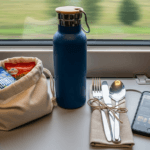
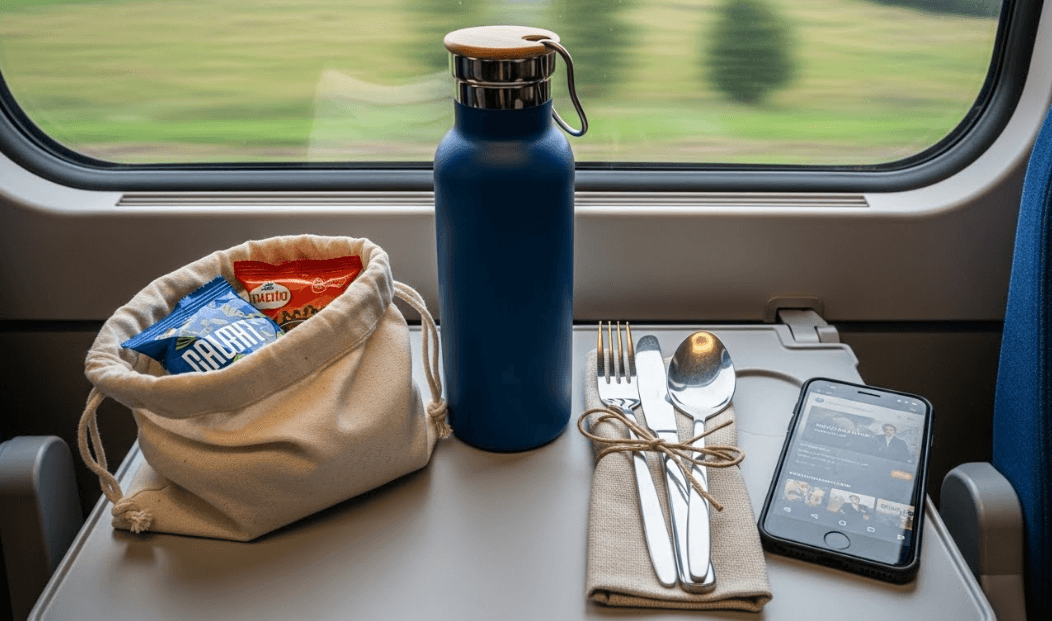
Your First Week Setup: Assemble your transport kit: 1-liter insulated bottle (12-hour cold retention), 200g mixed nuts in cloth drawstring bag, downloaded entertainment (offline Netflix, podcasts), screenshots of all tickets saved to phone photos (accessible without wifi).
Before each journey, identify refill points using Refill app (iOS/Android, 200,000+ stations across 30 countries with offline maps) or Tap app (global water fountain database). Final pre-journey meal: grocery store items in your containers.
Week Two Trap: Train delayed four hours. You’ve eaten everything. You’re irritable. Only option is plastic-wrapped sandwiches.
Rescue plan: Pack 30% more food than journey duration. Six-hour bus ride? Pack eight hours of snacks. Dried fruit doesn’t spoil. Nut butter in reusable squeeze tubes travels well. Homemade energy balls (dates, nuts, cocoa powder) last days.
By Month One—Transport Protocols:
- Trains: Easiest mode. Bring full meals in larger containers. Most European/Asian trains have hot water dispensers—pack tea bags and instant soup powder in small reusable containers.
- Flights: Hardest due to liquid limits. Bring empty bottle through security, fill immediately after. Pack powder drinks—electrolyte packets, tea, instant coffee in small jars. Solid foods pass easily—sandwiches, whole fruit, nuts, homemade granola bars.
- Buses: Medium difficulty. Refills rare. Bring 1.5x normal water. Pack non-refrigeration foods—hummus with vegetables first 4 hours, then switch to dried foods.
- Ferries: Bring everything. Pack as if refills don’t exist because on regional ferries, they don’t.
Reality Check: Budget airlines in developing regions and rural buses often have zero fountain infrastructure. In 95-degree heat, buy the water. But refill that bottle 10-15 times before disposing. In India during summer, parts of Middle East, remote South America, the bottle purchase isn’t failure. It’s adaptation.
Your job: reduce waste by 80-90% where systems support it. Do your best where they don’t.
![A train seat tray table with a reusable insulated water bottle, a cloth bag containing snacks, metal utensils tied with a cloth napkin, and a smartphone showing downloaded content, with blurred scenery visible through the window]](https://www.koritips.com/wp-content/uploads/2025/12/image-68-1024x604.png)
Zero Waste Travel Packing List and Long-Term Strategies
After your first month, the mental calculations become automatic. You walk into new cities and immediately identify which restaurants accommodate containers, which markets have bulk bins, where refill stations are located. The system becomes internalized.
Essential Zero Waste Packing List:
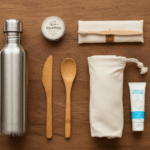
- Collapsible containers in three sizes (small for snacks, medium for meals, large for grocery hauls)
- Cloth produce bags in two sizes
- Metal utensil set wrapped in cloth napkin (serves as both placemat and napkin)
- One insulated water bottle
- Soap/shampoo bars in metal tin
Total weight: 1.2 kilograms. Fits in a packing cube smaller than two pairs of shoes.
Cost Reality: Zero waste hotels typically cost $150-400/night vs. $80-150 for standard hotels. But you save $20-30 daily avoiding bottled water ($4 each × 3-4 daily) and packaged meals ($8-15 markup over bulk ingredients). Break-even point: 7-10 days.
You stop apologizing. Instead of “Sorry, I know this is weird, but could you…” you say “Would you mind…” The difference is psychologically significant. You’re making a request, not confessing a flaw.
Build a network. When markets or restaurants enthusiastically accommodate containers, ask: “Do you know other places nearby friendly to reusable containers?” You’ll discover entire support networks that don’t advertise publicly.
Develop radar for genuine versus performative sustainability. Hotels printing “eco-friendly” on recycled paper but using plastic-wrapped soaps aren’t committed. Guesthouses that don’t mention sustainability online but have visible compost piles, offer containers for leftovers, and source from their garden—that’s real.
By month three, bringing your container to street food stalls feels like specifying “no onions.” It’s a preference. Vendors who accommodate do. Ones who can’t, you politely decline. There’s no drama because you’ve stopped creating drama internally.
Zero waste travel isn’t about finding perfect destinations—those barely exist. It’s about bringing zero waste practices into imperfect situations. You’re the variable that changes.
Every meal from your container, every declined housekeeping, every refill instead of purchase—these aren’t isolated acts. They’re data points demonstrating alternative systems work. When vendors consistently see travelers with containers, they start keeping clean containers behind the counter. You’re not just reducing waste. You’re modeling system change.
That’s the actual reward: not perfection or moral superiority, but quiet satisfaction knowing your presence made the infrastructure slightly better for the next person attempting the same thing.