You’re standing in front of a bulk bin, watching almond butter drip into someone’s jar, and your armpits are sweating through your vintage tee. Everyone here seems to know the choreography—weigh, dispense, label—while you’re clutching a ratty tote bag and thinking, “What if I spill everything?”
That anxiety is the biggest barrier between you and a shopping experience that’s actually quieter and less fluorescent than wandering supermarket aisles. But here’s what nobody tells you: the embarrassment has an expiration date. Four visits. That’s how long it takes before this stops feeling like performance art.
![A welcoming zero waste market storefront with wooden bins visible through large windows, a cheerful "Bring Your Own Container" sign by the door, and a customer entering with reusable bags]](https://www.koritips.com/wp-content/uploads/2025/12/image-30-1024x588.png)
Week 1: The Reconnaissance Mission (No Buying Required)
Your only job this week is to walk through the door. That’s it.
What you’re doing: Visit during a slow time (Tuesday morning, not Saturday afternoon) and observe. Watch how the bulk bins work. Notice where people weigh containers. You’ll spot everything from Tupperware to old pasta jars—nobody’s using matching Le Creuset.
The script when staff approaches:
“This is my first time here—I’m just looking around today to figure out how everything works. Do you have a guide or any tips for beginners?”
This signals genuine interest, not tire-kicking. Most zero waste shops have staff who love explaining their systems because they remember being confused too. Many offer orientation sheets or brief walkthroughs.
What to notice: Are containers weighed empty first (tare weight), then filled? Is there a separate station for this? Where are scoops stored? You’re gathering intelligence, not committing.
Week 2: The Single-Item Test Run
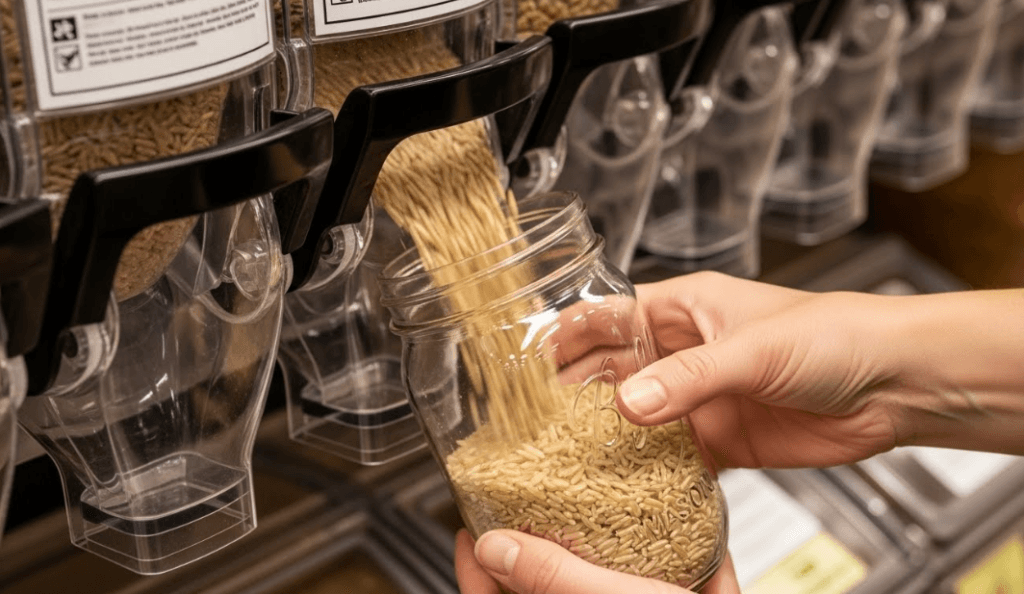
Now you’ll buy exactly one thing. Pick something foolproof: dried pasta, rice, or oats—items that pour easily and don’t require precision.
What to bring: One clean, dry jar with labels removed. A 16-ounce mason jar works. Write the tare weight on masking tape if the store requires it (you asked about this Week 1).
The script if you mess up:
“I think I poured too much—can I put some back, or should I just go with this amount?”
Spoiler: You can absolutely put it back. The bins are designed for this. Nobody’s judging you—they’re relieved you asked instead of panicking silently.
Physical reality check: That jar will be heavier than you expect. Bring a sturdy bag. Rice in glass weighs more than a plastic package feels like in the cart. Your shoulder will remind you that convenience packaging exists for a reason—but also that this weight means you’re carrying food, not air-puffed plastic.
The cost reality nobody mentions: That jar of organic oats just cost you $4.50 vs. $2.99 for a cardboard canister at Trader Joe’s. You’re paying for zero packaging and boutique overhead. Budget by weight, not by cart size—or cherry-pick only high-waste items (rice, beans, soap) and buy everything else conventionally. This isn’t hypocrisy. It’s math.
Week 3: The Awkward Questions You’re Allowed to Ask
This week, expand to three items, including one “scary” category: liquids (olive oil or dish soap).
The questions you’re afraid sound dumb but aren’t:
- “Do I need to dry my container completely before filling it with soap, or is a little moisture okay?” (Completely dry is ideal for accuracy, but slightly damp won’t ruin household products.)
- “If I’m buying honey and there’s dried honey around the spout, should I wipe it first?” (Yes—wipe it. Staff appreciate this.)
- “Can I bring containers that originally held non-food items, like a cleaned shampoo bottle for dish soap?” (Usually yes for non-food products; ask about their specific policy.)
The liquid soap reality: It will be messy the first time. Dispensers gurgle. Bring a small cloth to wipe drips. Your bottle’s exterior will be slippery. This isn’t failure—it’s the learning curve. By visit three, you’ll instinctively tilt the container at the right angle.

Handling the Social Weirdness Nobody Warns You About
Scenario 1: Someone behind you in line is clearly in a hurry.
Your instinct is to rush, fumble, and spill. Instead:
“I’m still figuring out the system—feel free to go ahead of me if you’re in a rush!”
Most people will either say, “No worries, take your time,” or gratefully skip ahead. Either way, you’ve removed the pressure.
Scenario 2: A well-meaning customer offers unsolicited advice that contradicts what staff told you.
“Oh interesting! I’ll double-check with the staff to make sure I’m following their preference. Thanks though!”
This politely closes the conversation without debating. Every store has slightly different systems—you’re not required to adopt another customer’s routine.
Scenario 3: You drop a scoop into the bin or spill rice on the floor.
Do not flee the scene. Say:
“I just dropped the scoop in the bin—could I grab someone to retrieve it?”
Or:
“I spilled a bit—do you have a dustpan I can use?”
Staff have scoops for retrieving scoops. They have brooms. This is not a tragedy—it’s a Tuesday.
Week 4: Building Your Actual System
By now, you know what you’ll realistically buy in bulk. Time to set up containers at home so this doesn’t feel like a chore.
What works long-term:
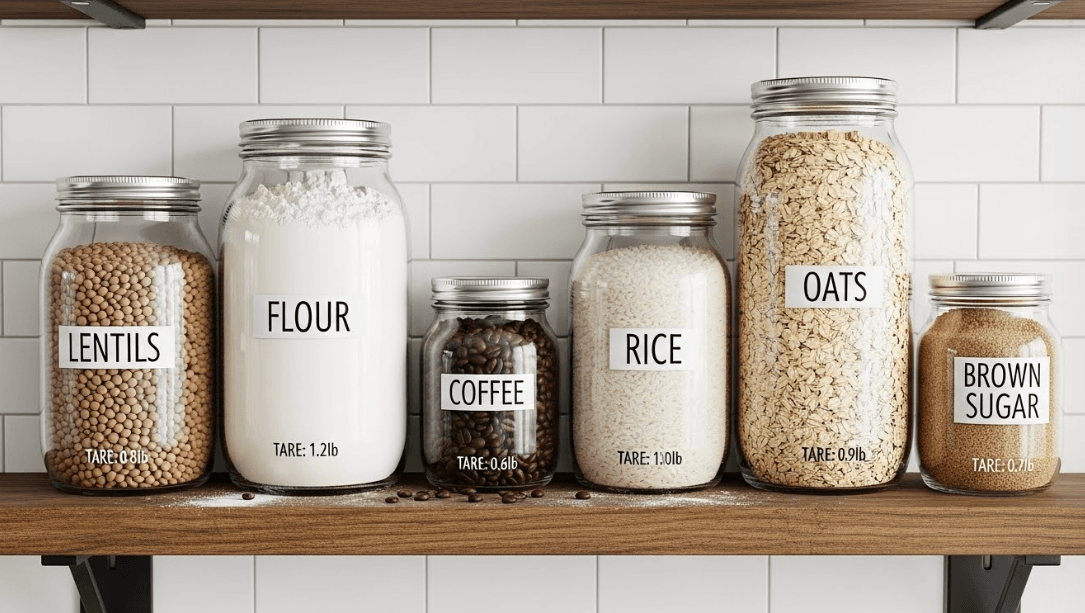
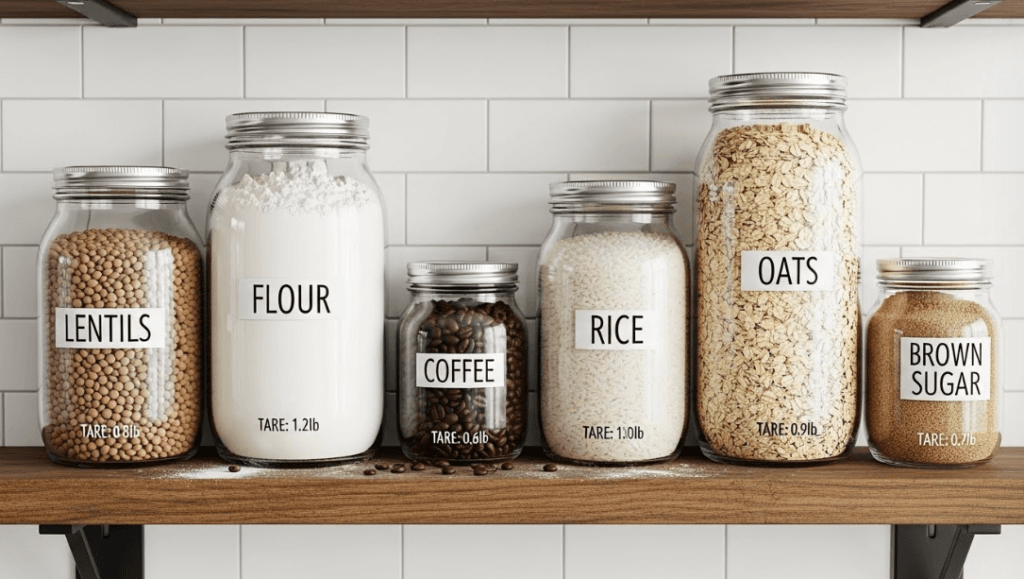
- Pre-staged containers: Keep 3-4 clean, dry jars in a shopping bag by the door. Don’t scramble the morning of—you’ll talk yourself out of going.
- Label the tare weights: Use a label maker or permanent marker on masking tape. Saves time every trip.
- Batch shop: Go every 2-3 weeks, not weekly. Zero waste markets are for staples, not milk-runs. Plan around the store’s delivery schedule if possible—fresher stock, better selection.
The stuff that stays annoying (and that’s okay):
- Jars clinking together in your bag on the walk/drive home. Solution: fabric dividers or bundled tea towels between containers.
- Forgetting containers and having to buy the store’s paper bags. This will happen. You’re not a failure—you’re human.
- Some items cost more in bulk. Spices, certain nuts, and specialty flours are often pricier than conventional stores. Choose your battles. Buying dish soap and oats in bulk while grabbing discounted spices elsewhere isn’t hypocrisy—it’s practicality.
What This Actually Looks Like Six Months In
You won’t become the person who makes their own toothpaste (unless you want to). You will become someone who:
- Doesn’t think twice about refilling shampoo bottles
- Knows exactly how many cups of rice fit in your favorite jar
- Realizes the zero waste market smells better than supermarkets (no industrial refrigeration hum, more cinnamon and coffee)—but also that you’ve walked out three times without the one thing you came for because they were out of stock
- Occasionally backslides into buying a plastic-wrapped emergency item without guilt
The unexpected social shift: Other people start asking you questions. A neighbor notices your jars. A friend mentions wanting to try a zero waste shop but feeling intimidated. You’ll remember feeling exactly that way—and you’ll tell them about the reconnaissance mission. The cycle continues.
“The first time I walked into a zero waste market, I spent twenty minutes pretending to read ingredient labels because I was too embarrassed to ask where the scales were. Now I’m the person helping confused newcomers find the chickpea bin. The only difference between those two versions of me? Four weird, clumsy visits where I didn’t let embarrassment win.”
Zero waste markets aren’t a test you pass or fail. They’re just a different way to shop—one that trades the ease of grab-and-go for the satisfaction of leaving without a trash bag full of packaging. Some days that trade feels worth it. Some days it doesn’t. Both days are fine.
Start with Week 1. Just walk through the door. The rest is just repetition until it stops feeling strange.