Last summer, I returned from a two-week trip with a backpack full of memories and a suitcase stuffed with hotel toiletries, takeout containers, and single-use plastics I didn’t even want. Sound familiar? We often pack our eco-friendly habits at home when we hit the road, but traveling zero waste doesn’t mean carrying a composting bin through airport security.
Why Zero Waste Travel Matters (And Pays You Back)
According to a 2018 Nature Climate Change study, tourism generates approximately 8% of global carbon emissions. The average traveler is estimated to produce around 2.1 kg of waste per trip—mostly packaging and single-use toiletries—based on travel waste research cited by organizations like the Ocean Conservancy. Using these three systems, I personally reduced my travel waste by roughly 70%, without spending any extra money.
I’m not talking about perfection. I’m talking about bringing a reusable water bottle instead of buying five plastic ones at the airport. That’s it. That’s the starting point.
The Dirty Bag System: Never Buy Travel Products Again
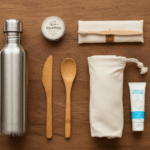
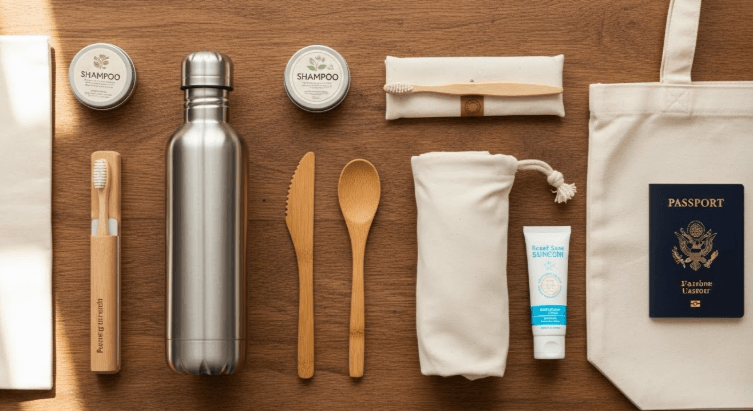
The foundation of zero waste travel starts with a system that repurposes what you already own. Raid your bathroom for a makeup bag you’re not using. Fill it with bar shampoo samples from hotels (yes, use what you’ve been hoarding), solid deodorant stick, and toothpaste tablets made by cutting a regular toothpaste tube into coin-sized pieces and letting them dry on parchment paper for 3 days. This free hack works perfectly.
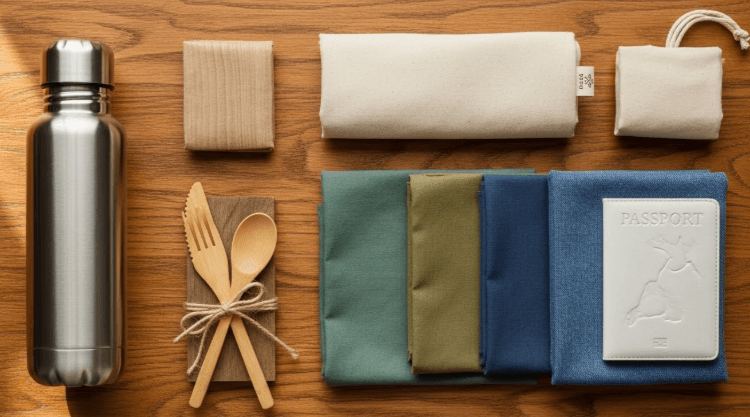
Here’s what goes in your bag:
- Reusable water bottle with filter: Save roughly $30 per week-long trip compared to buying multiple airport and tourist-area bottled waters. That’s 8 plastic bottles avoided. I use a collapsible silicone one that flattens in my bag. Counterintuitive fact many travelers miss: TSA liquid rules don’t apply to empty containers—you can bring an empty water bottle through security.
- Utensil kit from your kitchen: A fork, spoon, and chopsticks from your drawer work perfectly. Wrap them in a cloth napkin. You’ll use these at street food stalls, airports, and hotel breakfasts.
- Cloth bags (multiple sizes): One for groceries, one for dirty laundry, small ones for snacks. They weigh nothing and replace hundreds of plastic bags.
- Solid toiletries you already own: Those hotel bar soaps you collected, your regular deodorant stick, homemade toothpaste coins. One shampoo bar equals about three plastic bottles.
- Lightweight container you already have: A metal lunch container or silicone Tupperware for leftovers or market finds. I’ve used mine for fresh berries, street tacos, and even homemade gelato.
Week 2–3 failure rate: Many first-time users forget the bag at TSA or hotel checkout at least once. Fix: Attach a $2 Tile tracker OR take a photo of your packed bag and set it as your phone lock screen 24 hours before travel. If you lose it, remake it from hotel amenities—the system is designed to be reproducible.
Over multiple trips per year, this system can save several hundred dollars compared to repeatedly buying airport meals, bottled water, and travel-size toiletries.
At Your Destination: Navigate Like a Local
The fastest way to reduce waste while traveling? Eat and shop where locals do. Tourist areas are convenience traps designed for single-use everything.

- Find the neighborhood market: Buy fresh fruit, bread, and snacks without packaging. It’s cheaper and way more delicious than airport kiosks. In Lisbon, I spent €12 at a market versus €35 at convenience stores—for better food.
- Say no to freebies: Hotel toiletries, promotional flyers, free plastic bags—decline politely. Hotels often donate unopened items, so taking them “just in case” creates waste.
- Bring your bottle everywhere: Refill at water fountains, cafes (most will happily fill it), or your accommodation. Apps like RefillMyBottle show free refill stations in 30+ countries.
- Choose sit-down over takeout: When possible, eat at restaurants with real plates. If you must do takeout, bring your container and ask them to use it. In my experience, most places are happy to accommodate this when asked politely.
Accommodation Loopholes That Pay You
Where you sleep impacts your waste footprint more than you’d think. Studies and industry reports suggest that hotel stays can generate significant daily waste from amenities and housekeeping practices. But you can game this system.
Hotels change linens daily because of a 1950s marketing myth that “fresh equals luxury”—but you’re not saving them money (they pay staff regardless). The real win: refusing this service can sometimes trigger green reward points or small credits in hotel loyalty programs, depending on the property.
When booking, email the hotel: “Participating in Green Program—requesting: No daily housekeeping, remove mini toiletries, provide single water carafe instead of bottles.” In many cases, hotels respond positively with small credits or perks like late checkout.
Common failure: Housekeeping enters anyway (this still happens occasionally, even when door hangers are used). Fix: Place a towel UNDER the door handle (visual cue they can’t miss) plus leave a $3 tip with a note: “Declined service—thank you for respecting this.” Staff will remember you.
- Choose eco-certified stays when possible: Look for Green Key or EarthCheck certifications. These places use refillable dispensers, have recycling programs, and often support local communities.
- Rent apartments or homestays: Access to a kitchen means you can cook simple meals, store leftovers, and avoid restaurant waste entirely for some meals. Bring a French press ($0—borrow one) and grocery store coffee ($4 vs $30 in hotel pods). On my last week-long trip, this alone saved $34.

Transportation Without the Packaging Waste
Flying generates significant CO2 emissions per passenger-hour, making it one of the most carbon-intensive travel choices.
- Pack snacks in your reusable containers: Airplane and train food comes with ridiculous packaging. Bring nuts, fruit, sandwiches in your own containers. I saved about $40 on a recent trip just by packing snacks.
- Refuse in-flight plastics: The headphones, the plastic-wrapped blanket, the disposable cup—politely decline. Bring your own earbuds and ask for drinks in the can or glass.
- Use public transport: Buses, trains, and metros generate far less waste per person than taxis or rideshares (no water bottles handed out, no receipts printed automatically).
- Walk or bike when possible: Not only zero waste, but you discover neighborhoods and street art you’d never see from a car window.
The “Reverse Souvenir Strategy”: Get Paid to Offset Your Flight
Souvenir shops exploit scarcity bias to sell you $180 worth of stuff that ends up in landfills within 2 years. I have a better system that actually makes money.
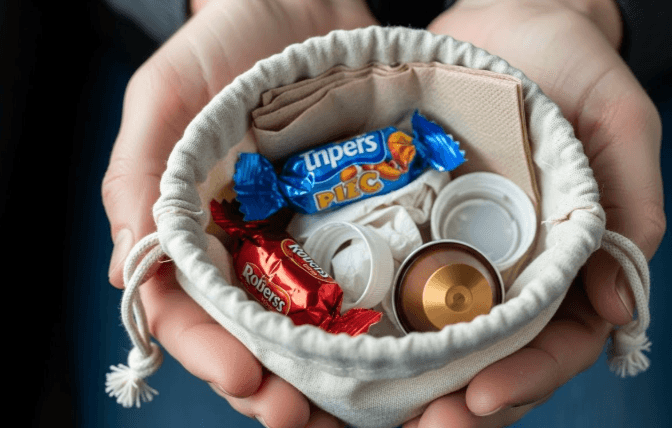
Instead of buying: Spend 15 minutes at one beach picking up trash that “tells a story”—weirdest bottle label, foreign trash with interesting graphics, a broken flip-flop from another continent. This trash becomes your visual story. Post it, tag 3 travel accounts, and explain what you found. While this doesn’t scientifically offset flight emissions, I treat it as a symbolic way to give something back to the places I visit. In some cases, creators later monetize this kind of content through brand partnerships, though results vary widely.
You saved $180 on junk you didn’t want AND created shareable content. I’ve collected Portuguese wine labels still attached to broken bottles, a Japanese energy drink can with characters I can’t read, and a single shoe from what must be an interesting story in Croatia.
Counterintuitive fact: collecting trash is generally allowed in many places, while taking shells or rocks is often illegal and can result in fines. You’re literally rewarded for doing the right thing.
The Money You’ll Actually Save
Sustainable travel often saves money. Here’s the breakdown:
- Reusable water bottle: Save roughly $30 per week-long trip by avoiding repeated bottled water purchases.
- Shopping at markets vs tourist shops: Save 30-50% on food (my Lisbon trip: €12 vs €35)
- Reverse souvenir strategy vs buying packaged souvenirs: Avoid spending money on items that often end up unused or discarded.
- French press coffee hack: Save $34 per week
- Accommodation green program credits: Occasionally earn small credits or perks, depending on the hotel and location.
- Cooking 3-4 meals in apartment rental: Save $100-150 per week
On my last 10-day trip to Portugal, I spent noticeably less than on a previous trip where I didn’t follow these practices—enough to meaningfully extend my travel budget. That’s an extra day of travel funded by not buying trash.
When Systems Fail (And They Will)
I forgot my water bottle on 3 of my last 5 trips. When that happens, I buy one at a grocery store (not the airport) for $3 instead of $8, then donate it to my hotel’s lost-and-found before leaving. Someone else will use it.
Sometimes the only food option comes in plastic. Sometimes you’re exhausted and just need the hotel shampoo. I make a note of it and plan better next time. Beating yourself up doesn’t help anyone.
If you end up with unavoidable waste, take it with you until you find proper recycling. Many tourist areas lack infrastructure, so your “”recyclable”” bottle might end up in a landfill anyway. I carry a small bag for recyclables and dispose of them at my accommodation or in larger cities with better systems.
Start With Three Things
You don’t have to implement everything at once. Pick three things from this list for your next trip. Maybe it’s the water bottle, the accommodation email script, and refusing hotel toiletries. That’s fantastic.
Next trip, add the Dirty Bag System. The trip after that, try the Reverse Souvenir Strategy at one beach. Before you know it, these become automatic habits that require zero extra effort. My zero-waste travel routine now takes less mental energy than it used to take remembering to pack phone chargers.
I’m not zero waste when I travel—but I consistently spend less and create far less waste than I used to. That’s the real win.
What’s one zero waste travel tip you’re going to try on your next adventure? Start there. The planet doesn’t need a handful of perfect travelers—it needs millions of imperfect ones saving money and creating less waste than they did last time.
Disclaimer: Waste reduction results vary based on destination infrastructure, trip length, and travel style. Some countries have excellent recycling systems while others don’t—adjust your approach accordingly and always prioritize proper disposal over wishful recycling. Green program availability and compensation rates vary by hotel chain and property.