Learn how to find, participate in, and start local zero waste events with step-by-step timelines, copy-paste scripts, and practical strategies for overcoming beginner anxiety. Your concrete action plan for zero waste community engagement.
That knot in your stomach before attending your first zero waste event? That’s your brain protecting you from potential social judgment. Completely normal.
I stood outside my first repair café genuinely considering driving home, convinced everyone inside would be expert environmentalists silently judging my recycling mistakes. The reality? A retired accountant learning to patch jeans and a college student asking which bin was for compost.
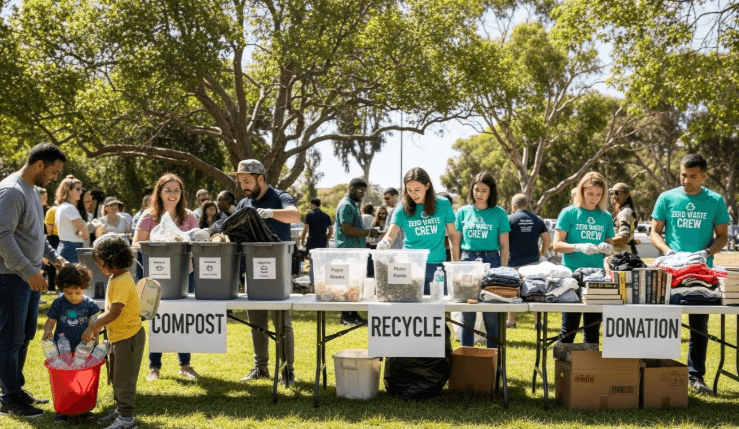
These events aren’t filled with eco-warriors. They’re regular people figuring out zero waste together. When you see actual neighbors sorting through clothing swaps or asking basic questions, your brain recategorizes zero waste from “extreme lifestyle” to “normal thing my community does.” That shift happens through physical presence, not reading articles.
Where to Find Zero Waste Events Near You
Searching for local zero waste events feels like looking for a secret society. The grassroots nature means no polished websites or sponsored ads.
Digital search methods that actually work:
- Meetup.com: Search “zero waste [city]” or “sustainability [city]”
- Facebook Groups: Join “[City] Zero Waste” groups, not just pages (groups have active discussions)
- Nextdoor: Search “repair café,” “clothing swap,” or “community garden” in your neighborhood feed
- Instagram hashtags: #ZeroWaste + your city name shows local activists and events
- Reddit: Search “r/[yourcity] zero waste” for neighborhood-specific recommendations
- Eventbrite: Filter by “Environment & Sustainability” + location
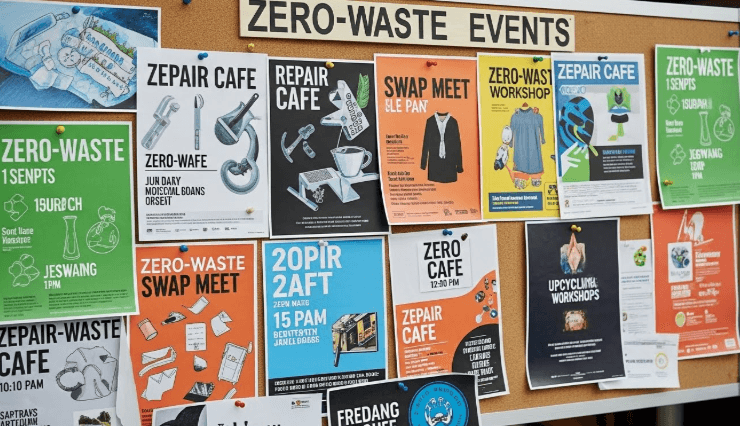
But here’s what everyone misses: physical community boards still work. Your library, community center, and coffee shop bulletin boards advertise events that never make it online. I found my most active group through a hand-stapled flyer at the library—no website, no social media, just a date and email address.
The timeline you should actually follow:
Week 1: Pick ONE event happening 2-3 weeks out. Not this weekend—give yourself mental preparation time. Put it in your calendar with an alert immediately.
Week 2: Your brain will generate excuses. “It’s too far.” “Maybe next month.” Counter-strategy: commit to the 30-minute rule. You’re going for exactly 30 minutes with a legitimate exit plan.
“I’m observing one event this month as an experiment. I don’t have to speak, volunteer, or stay the whole time. I’m collecting information about how real people do this.”
This script removes pressure to “perform” as an engaged participant and activates natural curiosity instead.
Bringing a friend? Use this:
“I found this repair café happening Saturday. Want to check it out for 30 minutes? I’m curious what happens there—no pressure to stay if it’s weird.”
Month 1: Attend with one specific question: “What’s one thing a beginner should try first?” This conversation starter doesn’t require pretending you know things you don’t. Put the answer in your phone notes immediately. This creates memory anchors—your second event will feel familiar because you’re building on documented knowledge.
What to Expect at Your First Zero Waste Event
You will have 1-2 failed attempts. You’ll show up to a canceled event nobody updated online. You’ll find an outdated website for a dissolved group. You’ll arrive at the wrong location.
This isn’t incompetence. It’s the nature of volunteer-run grassroots organizing. Most local sustainability events are managed by 2-3 people doing this in spare time while juggling jobs and families. They’re not professional event coordinators.
Budget failed searches as part of your learning curve. The group you eventually connect with will be worth the initial confusion—only if you don’t quit after the first dead end.
How to Participate in Zero Waste Community Events (No Experience Required)
After attending an event or two, you’ll think: “I should contribute.” Immediately followed by: “But I don’t know enough yet.”
Here’s what kills involvement: assuming zero waste events need experts who can teach composting workshops or explain biodegradable plastic chemistry.
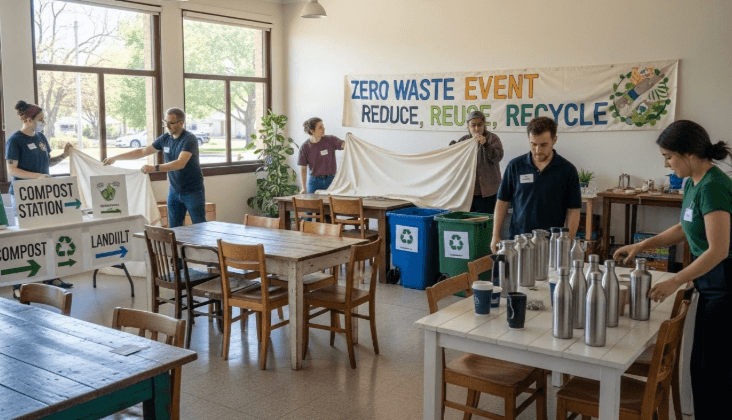
What these environmental community events actually need desperately? Someone to set up chairs. Manage the sign-in sheet. Greet people at the door. Help carry boxes. Stay fifteen minutes after to break down tables.
These infrastructure tasks are chronically understaffed because everyone assumes they’re not “real” contributions. But without logistics, expert workshops never happen.
At your next event, identify the person moving around fixing things—not giving a presentation. Before you leave:
“Hi, I’m new to zero waste but want to help. I don’t have technical skills yet, but I’m reliable for setup, breakdown, or admin tasks. What’s actually useful for your next event?”
This script acknowledges beginner status without apologizing, offers concrete bounded help, and lets them identify genuine needs.
Week 1 after attending your first event: Get one name and one email from an organizer. Don’t volunteer for the current event—that’s overwhelming. Ask about future opportunities.
Week 2: They’ll email something vague like “we need help with our next swap.” Most people ghost because it feels open-ended. Reply with specifics:
“I can commit to 2 hours for table setup from 9-11am. Is that useful?”
Bounded commitments prevent scope creep that kills volunteer motivation.
Your actual volunteer shift: Expect 30% of your time figuring out what’s happening. Supplies will be in the wrong place. Instructions will be unclear. Plans will change last minute. This is normal grassroots culture, not dysfunction.
Bring water, phone charger, and comfortable shoes. Accept that “winging it” is the organizational style. People who need corporate-style coordination burn out within two events.
Month 1: Immediately after volunteering, while feeling good about helping, ask: “When’s your next event?” Calendar it right then. Post-participation dopamine makes future commitment feel easy. Wait three days, and decision fatigue makes you ghost.
When imposter syndrome hits:
“The person managing the sign-in table contributes as much as the expert speaker—without infrastructure, no event happens.”
How to Start a Zero Waste Group in Your Neighborhood
At some point you’ll think: “I wish there was an event for [specific thing] in my neighborhood.” Most people wait for someone else to organize it.
The secret: starting your own zero waste initiative doesn’t require certification, years of experience, or expertise. It requires picking a date and telling people.
The psychological hurdle is massive. We’re trained to believe “organizing” equals “leadership” equals “having all answers.” But you’re not starting a nonprofit. You’re coordinating time and place for neighbors to try something together.
Simplest formats to start with:
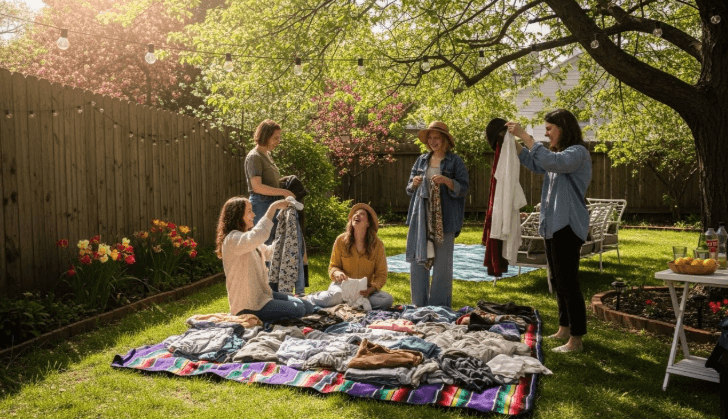
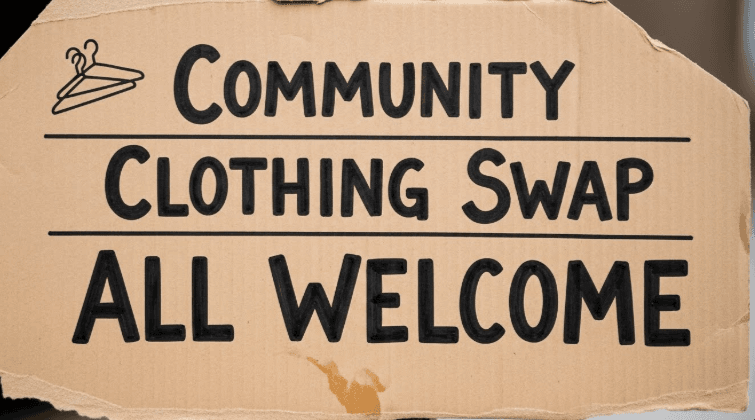
- Clothing swap: Everyone brings 5 items, takes what they like, donates the rest
- Park cleanup: Meet at specific spot with trash bags you provide
- Repair help hour: People bring broken items, group crowdsources solutions
- Bulk buying co-op: Pool orders from local bulk store to split delivery costs
Notice what none require: you being an expert. You’re the calendar-keeper, not the teacher.
The Exact Steps to Organize Your First Zero Waste Event
Week 1: Pick your format based on what you’d personally attend. Reserve a free public space—library room, park pavilion, or community center—for 2 hours, scheduled 4-6 weeks out. This gives invitation time without “it’s too soon” paralysis.
Send one direct invitation to 10 specific people. Not a public Facebook post yet. Text or email people you actually know: neighbors, coworkers, parents from your kid’s school. Personal invitations get responses; public posts get ignored.
“I’m organizing a small clothing swap at [location] on [date]. No rules, no speeches—just bring 5 items you don’t wear, take what you like, donate the rest. Want in? I need 2-3 people minimum to make it work.”
That last sentence is critical. It tells people their attendance matters and sets realistic minimum expectation.
Week 2: You’ll want to add complexity. Themes! Speakers! Instagram accounts! Resist completely. Write “Version 1.0 Goal: 3 people show up” on a sticky note where you’ll see it daily.
Complexity kills momentum for beginners. Your job is facilitating one successful small gathering, not launching a polished organization.
Legal Stuff Nobody Tells You:
For park events, check if you need a permit (most free gatherings under 25 people don’t). For clothing swaps in community centers, ask about liability waivers—some venues require them, most don’t for informal exchanges. If donating leftover items, get a receipt from the charity for participants’ tax records. When in doubt, call the venue and ask: “What do you require for a small community swap event?”
Event day: Expect 30-50% no-shows even with RSVPs. Standard event math, not personal rejection. If you invite 10 people and 5 show up, that’s successful.
Attendees who show up become your core group. No-shows self-select out early, saving you time trying to engage people who weren’t interested.
During the event, ask: “What would make this better next time?” Pick ONE suggestion maximum to implement. Not three. One.
Before people leave, ask right then: “Should we do this again in 6 weeks?” Real-time commitment captures enthusiasm before daily life erases it. Get verbal yeses, then send calendar invite that evening.
Common Questions When Starting Zero Waste Events
Someone will inevitably ask a question you don’t know. “Are these containers actually biodegradable?” “What’s the city’s composting policy?” “Is this brand really zero waste?”
Your reflex: panic, Google frantically, or feel like you’ve failed. Instead:
“Great question—I don’t know yet! Let’s try [simple solution] for this first one and adjust next time based on what actually happens.”
This acknowledges the question is valid, removes pressure to be all-knowing, and models the experimental mindset that makes zero waste sustainable long-term.
You’re not building a perfect system. You’re creating space for neighbors to figure things out together.
How to Run Recurring Zero Waste Community Events
Your first event will not go perfectly. Someone will show up early before you’ve finished setup. Someone will ask questions you can’t answer. Someone will complain about something you didn’t anticipate.
You’ll spend the evening replaying everything that went wrong and considering never doing it again. Then, days later, someone texts: “That was fun. When’s the next one?”
The hidden trade-off of organizing: you absorb stress and uncertainty so others can just show up. That’s not martyrdom—it’s the coordinator role. But know this going in so you’re not blindsided.
Budget emotional energy for controlled chaos at the first event. By the third event, you’ll have systems. By the fifth, it’ll feel routine. But the first one? Supposed to feel wobbly.
The difference between one-time event and actual initiative: Schedule your second event before the first one ends. Not “sometime in the future.” Put a specific date on the calendar while people are still in the room.
After your second event, identify one reliable, engaged person. Ask directly: “Would you want to co-organize the next one? We could split tasks.” Co-organizing prevents burnout and models collaborative structure that makes initiatives sustainable.
By month three, if events consistently get 5+ attendees, you have something real. That’s when you can think about expanding—social media presence, different event types, formal group structure. But not before. The graveyard of community initiatives is filled with people who built infrastructure before proving consistent attendance.
Measuring Impact: Zero Waste Community Event Success
Success for a local zero waste initiative looks like: Five neighbors meeting quarterly to swap clothes. Eight people showing up to park cleanup. Three families coordinating bulk buying orders.
Not hundreds of followers. Not professional signage. Not nonprofit status. Just regular people consistently doing something together that reduces waste.
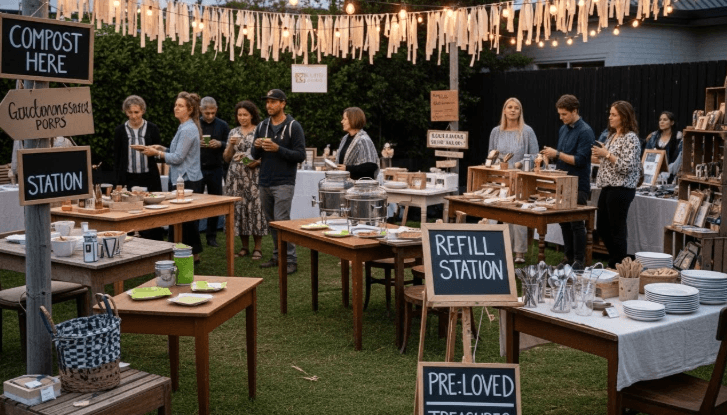
The Instagram version of zero waste events—perfectly styled, huge turnouts, professional photography—represents maybe 2% of reality. The other 98% looks like someone’s garage, a folding table, and a hand-drawn sign.
That unglamorous 98% is where actual work happens. Where new people feel comfortable asking basic questions. Where experimentation and failure are expected parts of learning.
If your event helps even three people try one new zero waste practice, you’ve created measurable impact. Don’t let the performance of “perfect” activism online convince you that small and scrappy isn’t legitimate.
Getting Started with Zero Waste Events: Your Action Plan
Close this tab. Open your calendar. Right now.
Pick one: finding an event to attend, volunteering at an existing initiative, or starting something small. Put a date on your calendar for taking the first action. Not researching more. The specific first action.
If you’re finding an event: Calendar 30 minutes this week to search and pick one event happening in the next month.
If you’re volunteering: Calendar sending that one email to an organizer within 48 hours.
If you’re starting something: Calendar reserving a space this week for an event 4-6 weeks out.
The transition from “interested person reading about zero waste” to “person actively involved in zero waste community activities” happens in these micro-commitments, not in the big decision to “get involved someday.”
You don’t need more information. You don’t need to feel ready. You just need to show up to one thing and see what happens next.
That’s how people actually get involved in local zero waste events and zero waste groups. Not through grand transformations or perfect preparation. Through showing up imperfectly to one small thing and building from there.