Three years ago, I stood in my kitchen drowning in plastic packaging, wondering if my reusable bags made any difference. Then I discovered my city’s composting program—funded by municipal waste reduction programs I didn’t know existed. Within eight weeks, my household trash dropped from four bags weekly to one.
Here’s what changed: I stopped trying to solve waste alone and started using government support for waste reduction initiatives. Tax credits for sustainable practices. Extended Producer Responsibility laws forcing manufacturers to take back packaging. Grants for zero waste businesses creating bulk shopping options.
These aren’t abstract policies. They’re infrastructure that makes your sustainable living efforts actually work.
How Zero Waste Legislation Reduces Social Barriers to Sustainable Living
Remember the cringe of being the only person bringing a reusable cup? That self-conscious moment when the barista treats your container like a calculus problem?
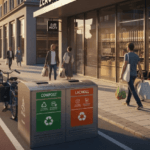
When my city passed an ordinance requiring businesses to accept reusable containers, the social friction evaporated. Staff were trained. Other customers followed. The policy normalized the behavior.
“I used to feel like I was inconveniencing everyone. Now that there’s a city policy, businesses are prepared. It’s not awkward—it’s normal.”
Government legislation for circular economy principles shifts the burden from individual consumers to systemic infrastructure. You’re still making choices, but you’re not swimming upstream alone.
Understanding Extended Producer Responsibility (EPR) Laws
Extended Producer Responsibility is the policy mechanism that makes manufacturers responsible for product end-of-life management. Instead of you figuring out where to recycle that broken toaster, the manufacturer is legally required to take it back.
Why EPR Works: The Psychology of Loss Aversion
Humans avoid responsibility until financial pain exceeds inaction cost. EPR laws exploit this neurological principle. When a manufacturer pays $0.15 per unit for disposal infrastructure, they suddenly have incentive to redesign packaging to cost $0.08 instead.
You benefit because take-back programs exist, products become more repairable, and packaging gets simpler.
EPR Compliance Script for Small Businesses
If you run a small business navigating EPR requirements, here’s the exact language that works:
“In Germany, companies paying into EPR programs get preferential shelf space at major retailers because compliance is verified. I’m calling our industry association to understand which EPR calculator applies to our product category. Most systems charge based on weight and material type—switching from multi-material to monomaterial packaging dropped our EPR fees by 40%.”
Action step: Call your industry association. Ask specifically about EPR calculators for your product category. Request case studies from similar businesses.
Week 1: Using EPR Take-Back Programs
I keep a running phone list of companies with EPR-mandated take-back programs:
- Terracycle for hard-to-recycle items
- Electronics manufacturers with mail-in recycling (legally required in 25 states)
- Mattress companies (EPR laws in California, Connecticut, Rhode Island)
- Paint retailers (10 states require manufacturer-funded collection)
When buying something new, I check if EPR applies. If the manufacturer is legally required to take it back, that factors into my purchase decision. It’s a built-in guarantee against permanent waste.
Week 1: Finding Local Zero Waste Programs and Government Grants
Your first week isn’t about changing everything—it’s about discovering support systems that already exist.
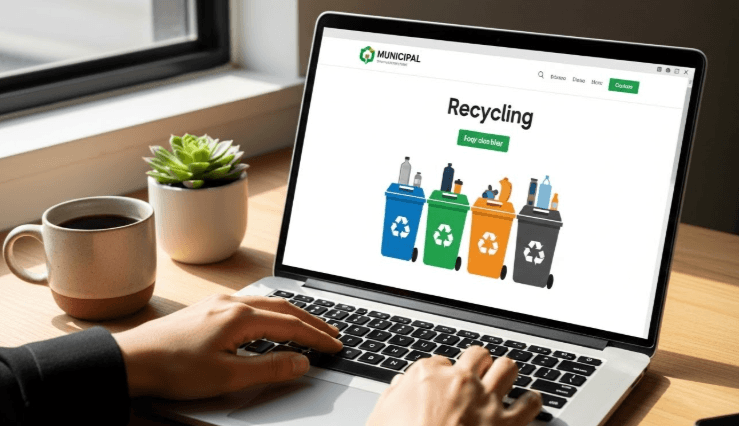
Day 1-2: The Grant-Hunting Roadmap
Forget generic website searches. Here’s the tactic that works:
Call your city’s sustainability office directly. Ask this specific question:
“What percentage of your allocated zero waste budget has been spent this fiscal year? Are there grant programs with low application rates?”
Why this works: Most municipal sustainability budgets are underspent by 30-40% because residents don’t know programs exist. You’re identifying money sitting unused.
When I did this, I discovered:
- Free kitchen compost pails (I’d been buying $30 bins)
- $200 rain barrel rebate (50% of purchase cost)
- Quarterly e-waste collection (I’d been paying $25/trip to private disposal)
Day 3-4: Download Recipient Lists
Request past grant recipient lists (usually 3 years back). These are public records. Use successful applications as templates for structure and language.
Look for patterns:
- What language do approved applications use?
- What budget ranges get funded?
- Which grant categories have repeat recipients (indicating ongoing programs)?
Day 5-7: Fiscal Year Timing Strategy
Submit applications 6-8 weeks after the new fiscal year starts. Budgets are freshly allocated, competition is lower, and review staff have capacity.
Most cities run July 1 – June 30 fiscal years, meaning September applications have highest approval rates.
Grants for Zero Waste Businesses: The Local Opportunity
In the past five years, government grants have funded these businesses in my city:
- Three bulk stores (funded by state circular economy grants)
- A repair café ($15,000 city grant for tools and space)
- Two reusable container rental services (responding to plastic bans)
- A textile recycling social enterprise (processing landfill-banned materials)
Each makes my zero waste life easier. They exist because policy created conditions—both regulatory requirements and financial incentives—for sustainable business models.
Weeks 2-3: Using Municipal Waste Reduction Programs and Tax Credits
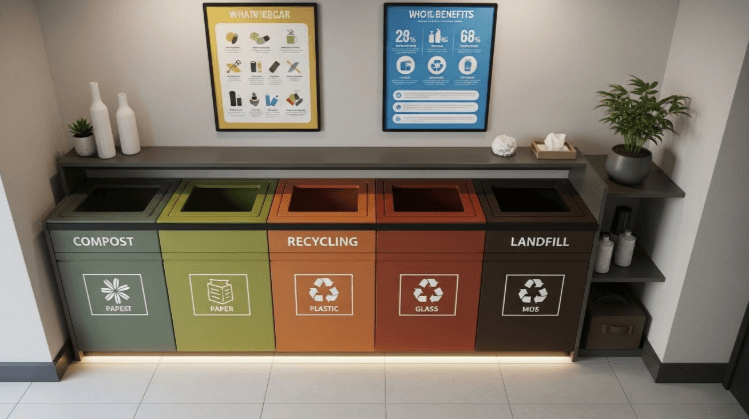
Now that you know what’s available, integrate this knowledge into daily life. This is where environmental regulations and waste management become tangible.
The Composting Setup (No Excuses)
If your municipality has composting (and increasingly, they do), Week 2 is when you actually set it up. Not plan to start—actually do it.
Get a countertop bin with a sealed lid. Proper bins don’t smell when closed. When you open it, there’s that earthy, slightly sweet decomposition smell—not putrid garbage stench. If it smells bad, you’ve added too much moisture or items your program doesn’t accept.
Most municipal waste reduction programs provide clear guidelines. Follow them exactly for three weeks. Don’t get creative. Learn the system first.
Result: I dropped from four trash bags weekly to one. The physical difference—less smell, less bag-tying, less garbage truck noise mattering—is immediate.
Business Engagement Script
Here’s the script I use constantly. It works because it references policy rather than personal preference:
“Hey, I noticed [city name] has a program encouraging businesses to accept reusable containers. Would you be able to put my coffee directly in my cup? I’ll hold it while you fill it.”
This approach educates the business about existing policies, makes your request seem normal, and offers a hygiene solution.
Success rate: 70% yes immediately, 20% check with manager then yes, 10% corporate policy prevents it.
Tax Credits You’re Missing
Depending on location, you might qualify for deductions on:
- Home composting systems
- Energy-efficient appliances reducing consumption
- Electric vehicles (transportation-related waste reduction)
- Water conservation systems
I got a 30% credit for installing a rain barrel system. Ask your accountant specifically about sustainability-related deductions. Last year, that credit offset my initial cost by $180.
Week-by-Week: Implementing Plastic Ban Alternatives for Restaurants
If you’re a restaurant owner facing single-use plastic bans, here’s the roadmap that actually works.
Why Plastic Bans Trigger Resistance
Loss aversion is stronger than gain motivation. You fear losing speed and convenience more than you value environmental compliance. You imagine customer complaints, operational chaos, and cost spikes.
Here’s what actually happens: initial friction fades within 6-8 weeks. Compliance becomes routine. Customers adapt faster than you expect.
The Restaurant Owner Script That Works
“I resisted the foam ban until I ran this test: half my to-go orders in fiber containers, half in foam. Customer return rate was identical. Complaint rate was identical. The only difference? Fiber containers stack better and my staff stopped getting chemical burns from melted foam hitting hot soup. Once I stopped fighting it and just ordered samples from three suppliers, I realized the operational ‘disaster’ I imagined didn’t exist.”
Week 1: Order Samples from Three Suppliers
Contact these suppliers specifically (they handle restaurant volumes):
- Eco-Products (wide range, reliable stock)
- World Centric (compostable certified options)
- Restaurantware (bulk pricing for high-volume)
Test with your actual menu items. Does the fiber hold up with your soup’s temperature? Do the lids seal properly for delivery? Does your hottest dish cause any structural issues?
Don’t assume. Test with real use cases.
Week 2: The Storage Trap (And How to Avoid It)
Fiber containers absorb moisture. If you store them like plastic, you’ll have structural failures.
Storage rules:
- Keep in original boxes (they’re designed for humidity control)
- Low-humidity storage area (not near dishwashers or ice machines)
- Six-month shelf life maximum
- Stack no more than 5 boxes high (weight compresses fiber)
I learned this after ruining 200 containers by storing them above a steam table. Condensation made them unusable. The supplier replacement cost $180.
Month 1: Train Staff on the 30-Second Lid Rule
Fiber lids seal differently than plastic. They need 30 seconds to “set” after closing, especially with hot contents. Steam needs to equalize pressure.
Train staff: Close lid, wait 30 seconds, then bag. Not immediately. This prevents “the lid popped open during delivery” complaints.
Post this timing reminder near your packing station. After three weeks, it becomes automatic.

Types of Government Zero Waste Policies: Bans, Incentives, and Mandates
Understanding policy categories helps you recognize them in action and advocate effectively.
Bans and Restrictions
Single-use plastic bag bans, styrofoam restrictions, plastic straw prohibitions. Controversial when announced, normalized within months.
I lived through my city’s plastic bag ban. First month: grumbling. Month three: bringing reusable bags was just what you did. Month six: only out-of-town visitors were caught off-guard.
These work because they remove the option to be lazy. They create new baseline normal.
Incentive-Based Programs
Deposit-return schemes for bottles, pay-as-you-throw waste pricing, discounts for reusable containers.
When my city switched to pay-per-bag trash collection, household waste dropped 60% within two months. Not because we became better people—because we became cost-conscious people. We suddenly noticed how much we could compost instead.
Infrastructure Mandates
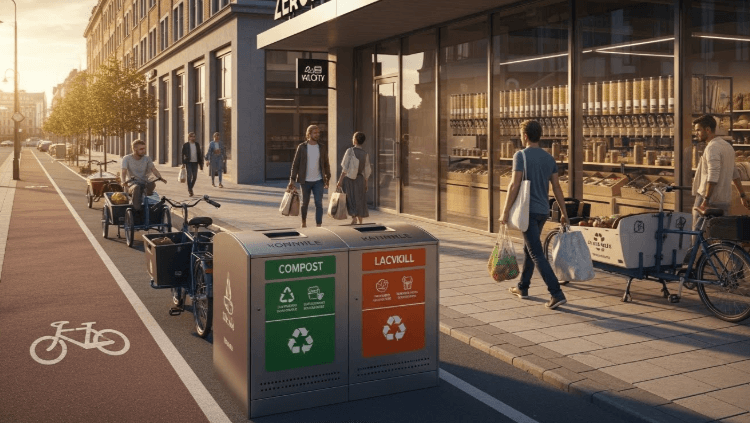
Required composting in apartment buildings, recycling stations in public spaces, obligatory electronics take-back.
These remove the “I would, but I can’t because…” excuse. When my building was required to provide composting, my “no backyard space” excuse evaporated.
Transparency Requirements
Laws requiring recyclability labeling, mandatory waste audits for businesses, public waste diversion reporting.
When packaging must state whether it’s recyclable in your local system, you make informed decisions at purchase rather than guessing at the bin.
Common Zero Waste Policy Failures (And How to Avoid Them)
Not every policy works. Understanding failure helps us advocate for better solutions.
The Recycling Symbol Disaster
Those triangle symbols with numbers 1-7? They indicate plastic type, not whether your local system can recycle it.
Result: People “wishcycle”—throw items in recycling hoping they’re recyclable—contaminating entire loads.
Better policy would require labels stating “recyclable in X% of US systems” with local guidance, not generic symbols.
Plastic Bag Ban Loopholes
Many bans exempt “reusable” bags. Manufacturers exploit this by making slightly thicker plastic bags meeting technical “reusable” thresholds but still essentially single-use.
I’ve watched stores switch from 5-cent thin bags to 10-cent thick bags customers throw away after one use. The waste problem barely changed; it just got more expensive.
Better legislation would define “reusable” by demonstrated durability and actual reuse rates, not thickness specifications.
Voluntary Programs Nobody Uses
My city launched a “reusable container program” for restaurants. Opt-in. Zero participation after 18 months.
Why? No enforcement, no incentive, perceived hassle, insufficient customer awareness.
Lesson: Voluntary programs sound nice but rarely create change. Mandatory programs with implementation grace periods work better.
Advocating for Zero Waste Legislation: 5-Minute Action Steps
You’ve been leveraging existing policies for weeks. You’re seeing benefits and noticing gaps. Here’s how to channel that awareness into advocacy without it consuming your life.
The Five-Minute Monthly Method
Most people don’t advocate for environmental regulations and waste management because they imagine it requires hours and confrontational meetings. Not true.
Monthly process:
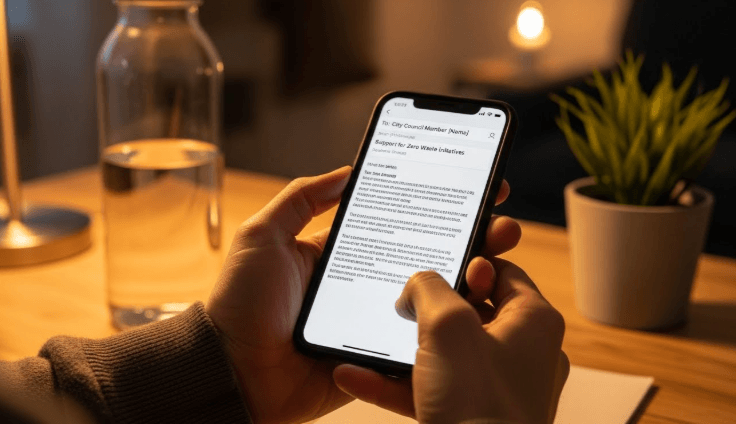
- Identify one specific, actionable policy (e.g., “require city events to provide compost bins”)
- Find the relevant official’s email (sustainability coordinator or council member)
- Send three paragraphs: what you’re observing, what policy would help, why it matters as a constituent
- CC relevant local environmental organizations to amplify
Time investment: five minutes. Impact: officially on record. Do this monthly—that’s 12 documented requests yearly. Multiply by a dozen engaged residents, and policy-makers notice.
The “I’m Offering, Not Asking” Frame
“I’ve been successfully using [existing program], and I’ve noticed [gap]. I’d be happy to provide feedback on what’s working if that would be useful for future policy development. I’m also willing to participate in community advisory groups on this topic.”
This approach has gotten me invited to two municipal sustainability working groups. I’m not an expert—I’m a resident with direct experience. Policy-makers want that perspective; they just don’t always know how to access it.
Document and Share Wins
When a policy works, say so publicly. Tag your city’s social media when you use a composting program successfully. Email your council member when a business benefits from accepting reusable containers.
Positive feedback reinforces good policy and provides evidence for expansion.
Your Next 30 Days: Making Policy Work for You
You don’t have to figure out zero waste in isolation. Infrastructure exists—or can exist—to support you. Your job: learn about it, use it, advocate for improvement.
Week 1: Call your sustainability office. Ask about budget spend percentage and grant programs. Download 3 years of recipient lists.
Week 2: Set up composting using municipal program guidelines. Use the business engagement script at three locations.
Week 3: If you run a business, order samples from three suppliers. Test with real menu items. Set up proper storage.
Month 1: Send one 5-minute advocacy email. Check EPR take-back programs before purchases. Train staff on new container protocols if applicable.
Government policies supporting zero waste movement aren’t separate from your personal journey. They’re the landscape in which your journey happens. Learning to navigate and shape that landscape makes everything else easier.
As more people engage with these systems, the systems improve. Your participation—even in small, simple ways—contributes to that improvement for everyone.
Keep bringing your reusable bags. Keep composting. But also keep asking what policies exist to support these behaviors, and keep pushing for better ones.
That’s how individual commitment becomes collective transformation. That’s how we move from “zero waste is something weird people do” to “zero waste is just how things work.”
You’re not alone in this. The systems are catching up. Help them along.